Why Noom Didn't Work for You
Let me guess how it went.
You signed up, did the color-coding, logged your meals, read the little psychology lessons. For a few weeks, maybe even a few months, it worked. The scale moved. You felt like you'd finally found something that clicked.
And then life happened. A work trip. A family dinner. A week where you just couldn't keep up with the logging. The streak broke, the motivation faded, and somewhere along the way you stopped opening the app.
The weight came back. Maybe all of it. Maybe more.
And now you're sitting with that familiar, exhausting feeling: What is wrong with me?
Nothing. Nothing is wrong with you. But a few things are wrong with Noom.
The Color System Isn't Personalized. It's Categorized.
Noom's traffic light system feels scientific. Green foods are good, yellow are okay, red are bad. It's tidy. It's easy to follow.
It's also completely generic.
The same color is assigned to the same food regardless of whether you're a 5'2" woman in perimenopause managing cortisol issues, a 6'2" man trying to lose 20 pounds before his annual physical, or a 25-year-old training for a half marathon. The algorithm doesn't know your stress levels, your hormones, your sleep, your relationship with food, or the fact that you travel every other week for work.
A color can't see any of that. A color is not a strategy.
When I build a plan with a client, I ask about all of it. Not to overwhelm you, but because the details are everything. The snack that derails you every afternoon at 3pm is different from the one that derails your coworker. Your triggers are yours. The plan has to be too.
Psychology Lessons Are Not Accountability
Noom leans hard into behavioral psychology, and there's real science behind that approach. Understanding why you eat emotionally, why you eat past fullness, why stress sends you straight to the chips. That awareness genuinely matters.
But awareness alone doesn't change behavior. Knowing you're an emotional eater doesn't stop you from emotional eating. I've worked with thousands of clients over 20 years, and I can tell you: the ones who make lasting change don't do it by reading about their habits. They do it by having someone in their corner when the hard moments actually happen.
That's the part Noom can't deliver. An app can send you a push notification. It cannot text you back at 7pm when you're at a work dinner staring down a bread basket and need to know exactly what to order. It cannot notice that you've been quieter than usual and check in. It cannot hear the stress in your voice and adjust your plan accordingly.
That kind of support isn't a feature. It's the whole point.
Logging Works Until It Doesn't
Food logging is a powerful short-term tool. For the first few weeks, the awareness alone changes your behavior. You make different choices because you know you'll have to record them.
But logging is also exhausting, and it has a well-documented failure mode: the moment you miss a day, it feels like you've broken something. And once you've broken the streak, it's easier to give up entirely than to log imperfectly.
This is not a character flaw. This is a completely predictable response to a system that treats every missed entry as a failure.
What I teach my clients is different. I don't want you to log your food indefinitely. I want you to understand your food. There's a difference. When you actually understand how specific foods affect your hunger, your energy, and your cravings, you don't need an app to keep score. You know when something's working and when it isn't, and you know what to do about it.
That's the goal. Not lifetime logging. Actual knowledge of how your body works.
The Coach Isn't Really a Coach
If you used Noom's coaching feature, you know what I mean. The responses were delayed, often felt scripted, and the "coach" cycled. You couldn't build a real relationship because you didn't know if you'd talk to the same person twice.
That's not coaching. That's customer support with a nutrition certificate.
Real coaching is a relationship. I know my clients: what they've tried before, what broke them last time, what they're afraid of, what they're celebrating. When something goes sideways, I don't send a templated response. I call or text because I already know enough about their life to say something useful.
The continuity matters. A lot.
So What Actually Works?
Here's what I've seen make the real difference across 20 years and thousands of clients:
A plan built for your actual life. Not for an average person who eats average meals in average situations. For you, the way you actually live: the restaurants you go to, the travel you can't avoid, the social situations that make clean eating hard.
Support that doesn't disappear between appointments. The critical moments aren't during a scheduled check-in. They're at 6pm on a Tuesday when you're exhausted and the easiest thing to do is order pizza. That's when you need access to someone who knows your plan and can steer you in the right direction.
A strategy that accounts for your triggers. Stress eating, late-night eating, eating out of boredom or exhaustion. These are patterns, and patterns can be interrupted. But only if someone helps you understand yours specifically and builds around them, instead of handing you a PDF about emotional eating.
Someone who adjusts when things change. Life doesn't hold still. Your hormones shift. Your stress levels change. A static app cannot adapt. A good dietitian can.
You Didn't Fail Noom. Noom Failed You.
I say this as someone who has watched hundreds of clients come to me after Noom, Weight Watchers, and a dozen other programs. They all come in with the same expression: a mix of frustration and something that looks a lot like shame.
They tracked every meal. They read every lesson. They tried harder than anyone should have to try. And they're still sitting in front of me, wondering what's wrong with them.
There is nothing wrong with them. There is something wrong with a system that sells generic tools as personalized support and calls that coaching.
You don't need an app. You need a strategy that actually fits your life, and someone in your corner when it gets hard.
If this sounds familiar, I'd love to talk. I offer a free 15-minute Zoom consultation. No sales pitch, just a real conversation about what's been getting in the way and whether I think I can help. If I don't think we're a fit, I'll tell you that honestly.
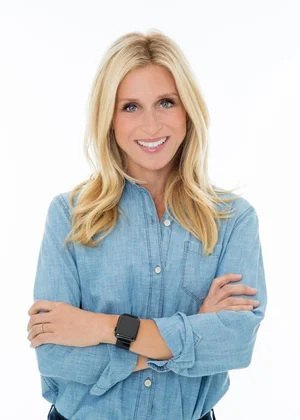
Heather Bauer, RDN is a nationally recognized Registered Dietitian Nutritionist with over 20 years of experience and thousands of clients. She is the author of Bread Is the Devil, The Wall Street Diet, and The Food Fix. Her work has been featured in The New York Times, CNN, the TODAY show, and more.